The college chapels of Oxford - a member's guide
Behind the porters' lodges are some of the finest small interiors in England.
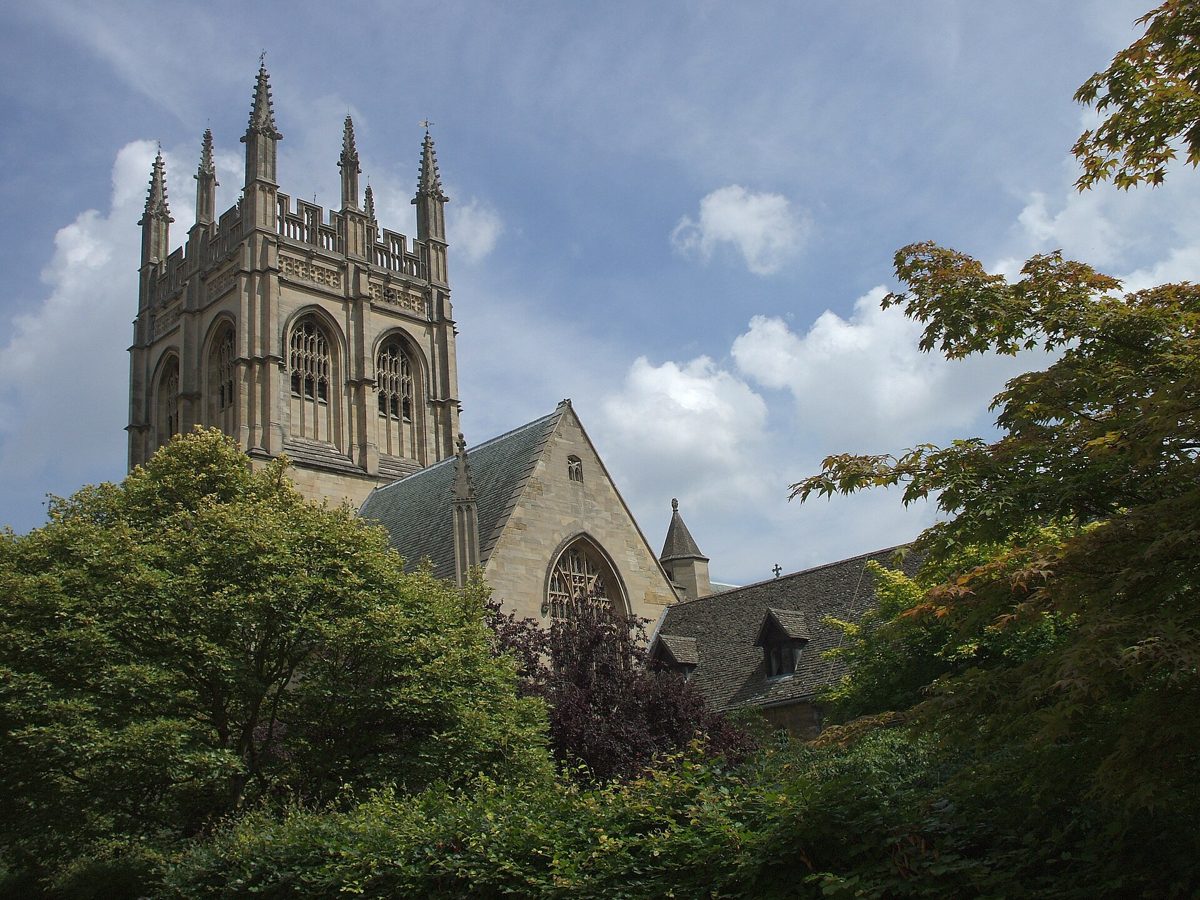
Oxford's college chapels are working religious buildings as much as architectural set pieces. This guide covers six that visitors can usually see: Merton's medieval glass, New College's reredos and Epstein's Lazarus, Magdalen, Exeter by George Gilbert Scott, Keble's Holman Hunt painting, and Christ Church Cathedral, which serves both cathedral and college chapel.
Merton College Chapel
Merton College Chapel is one of the older chapel spaces in Oxford, and its chief interest for most visitors is the survival of medieval stained glass. Look up before looking around: the coloured light is the point. The chapel's long history means the building has been altered and repaired, so it is best read as a layered interior rather than a single frozen moment. Check the east end, side windows, and any surviving medieval figures in glass, then take time with the woodwork and memorials. Merton's chapel rewards slow looking because the details are small and close to eye level.
What to look for: Medieval stained glass, especially older figurative panels The chapel's mixed medieval and later fabric Memorials and woodwork along the sides Changes in light as the day moves
New College Chapel
New College Chapel is the place for two very different objects: the medieval reredos behind the altar and Jacob Epstein's modern sculpture of Lazarus. The reredos gives the chapel its older devotional focus, while Epstein's Lazarus, carved in the twentieth century, adds a stark modern presence. Do not rush from one to the other. Stand back first to see how the sculpture sits in the chapel, then move closer to the reredos. The contrast between carved stone, painted or gilded medieval work, and Epstein's rougher modern surface is the real experience.
What to look for: The reredos behind the altar Epstein's Lazarus The relationship between medieval and modern sculpture The chapel's overall stone setting
Magdalen College Chapel
Magdalen College Chapel is part of a college whose architecture is strongly tied to its tower and riverside setting, but the chapel itself should be treated on its own terms. Look for the chapel's fittings, memorials, and the way it connects to the wider college. Magdalen has a long choral tradition, so the choir stalls and organ area deserve attention even when no service is taking place. The chapel is not only a museum piece; it is used by the college community, and that practical life is part of its character.
What to look for: Choir stalls and organ area Memorials to college members Chapel fittings and decorative details The chapel's place within the wider college
Exeter College Chapel by George Gilbert Scott
Exeter College Chapel was designed by George Gilbert Scott and is one of the clearest examples of Victorian Gothic Revival work in an Oxford college setting. Scott's chapel is not a medieval survival; it is a nineteenth-century interpretation of Gothic forms. Look for the pointed arches, rich interior decoration, stained glass, and the overall vertical emphasis. The building shows how Victorian architects used medieval language to create a serious religious interior. It is useful to compare it with Merton or New College, where older fabric dominates.
What to look for: George Gilbert Scott's Gothic Revival design Stained glass and decorative stonework The vertical lines of the interior Victorian interpretation of medieval forms
Keble College Chapel and Holman Hunt's The Light of the World
Keble College Chapel is closely associated with William Holman Hunt's painting The Light of the World. The painting is the reason many visitors come, but the chapel itself matters too. Hunt's image of Christ knocking at a door has become one of the best known religious paintings of nineteenth-century Britain. Inside Keble, look first at the painting, then at the chapel's broader decorative scheme, which belongs to the same Victorian religious world. The chapel's rich interior helps explain why the painting was placed there rather than in a plain room.
What to look for: Holman Hunt's The Light of the World The chapel's Victorian decorative scheme The relationship between painting and architecture Details of colour, light, and surface
Christ Church Cathedral
Christ Church Cathedral is unusual because it is both the cathedral of the Diocese of Oxford and the chapel of Christ Church. That dual role gives it a different status from the other college chapels. It is larger in scale and institutional weight, and it has the layered history expected of a cathedral. Look for the nave, choir, monuments, stained glass, and the way college and cathedral functions overlap. Because it serves both roles, the building can feel more public and more formal than a smaller college chapel, but it remains part of college life.
What to look for: The cathedral nave and choir Stained glass and monuments Signs of its dual cathedral and college role The scale compared with other college chapels
Frequently asked questions
Which chapel is best for medieval glass?
Merton College Chapel is the strongest choice in this group if your main interest is medieval stained glass. Its older glass is the feature most visitors come to see, and the chapel's long history gives that glass a proper setting. Take time with the east end and side windows rather than treating the chapel as a quick stop.
Where can I see Epstein's Lazarus and Holman Hunt's The Light of the World?
Epstein's Lazarus is in New College Chapel, while Holman Hunt's The Light of the World is in Keble College Chapel. These two works give very different experiences: Epstein's sculpture is modern and severe, whereas Hunt's painting is a famous nineteenth-century religious image. Seeing both in one Oxford visit shows how college chapels hold very different kinds of art.
Why is Christ Church Cathedral different from the other chapels?
Christ Church Cathedral is different because it is both a cathedral and a college chapel. The other chapels in this guide serve their colleges, while Christ Church Cathedral also serves the wider diocese. That double role affects its scale, atmosphere, and institutional importance, even though it remains part of college life.
This is an independent member's guide compiled by Oxford Society. We are not affiliated with the venues and institutions mentioned; opening arrangements and programmes change - always confirm details on the official websites before making plans.
← Back to Guides