Historic pubs of Oxford - a member's guide
Old rooms with real history: the Oxford pubs where the building is part of the story.
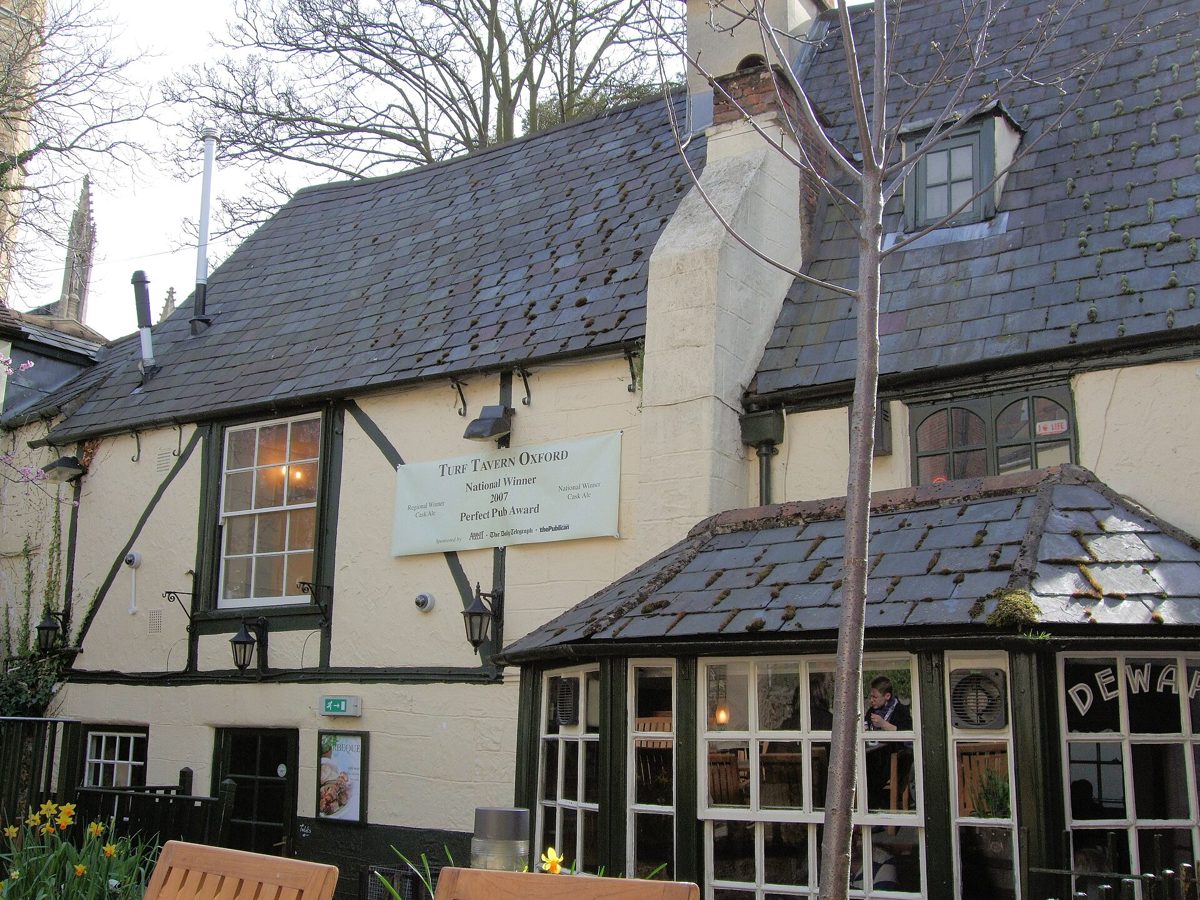
Oxford's historic pubs offer a direct link to centuries of academic, literary, and local life. The Turf Tavern, Eagle and Child, Lamb & Flag, and The Bear Inn each provide a unique window into the city's past, known for their distinctive architecture, hidden courtyards, and documented associations with famous figures and seminal movements, making them essential stops for understanding Oxford's heritage.
The Turf Tavern - A Hidden Gem
Tucked away down a narrow, cobbled alleyway off New College Lane and Holywell Street, the Turf Tavern is one of Oxford's most iconic and historically layered pubs. Its origins trace back to the 13th century, initially serving as a malthouse before transitioning into a public house. The building itself is a labyrinthine structure, having evolved over centuries with numerous extensions and alterations, giving it a charmingly disjointed appearance. Its name, "Turf," is thought to derive from its proximity to the city walls, where turf or peat might have been sold, or simply referring to the ground itself.
The interior of the Turf is a warren of small, interconnected rooms, each with its own character. Low ceilings, exposed wooden beams, and ancient stone walls contribute to a deeply traditional atmosphere. The uneven floors and quirky angles speak volumes about its age and organic growth. However, what truly distinguishes the Turf are its extensive outdoor courtyards. These multi-tiered spaces, often bustling with patrons, provide a unique al-fresco experience, allowing visitors to feel removed from the city's main thoroughfares despite being centrally located. The pathways and seating areas create a sense of discovery, enhancing its hidden gem status.
The Turf Tavern is famously associated with a diverse range of figures. It gained particular notoriety when former US President Bill Clinton, then a Rhodes Scholar, admitted in 1969 to trying cannabis there, famously stating he "didn't inhale." While the specifics of the incident remain part of Oxford folklore, the association is well-documented. Literary figures C.S. Lewis and J.R.R. Tolkien were known to frequent the pub, enjoying its secluded atmosphere. The pub has also served as a filming location for episodes of the Inspector Morse television series, further cementing its place in popular culture. Stephen Hawking, the renowned theoretical physicist, was also a regular visitor during his time in Oxford. Its long history as a student and academic haunt makes it a repository of countless untold stories.
The Eagle and Child - Literary Legends' Locale
Located prominently on St Giles', The Eagle and Child holds a special place in Oxford's literary history. The building dates to the 17th century, though a public house may have existed on the site earlier. It was originally a coaching inn, a common feature of major roads into the city. Affectionately nicknamed "The Bird and Baby" by locals, its name refers to the crest of the Earls of Derby, depicting an eagle carrying a child, possibly derived from a medieval legend.
The interior of The Eagle and Child is relatively compact, characterized by traditional wood paneling and low ceilings, creating an intimate and historic feel. The "Rabbit Room" is the most celebrated space within the pub. This small back room, with its fireplace and worn furnishings, became the regular meeting place for one of the 20th century's most influential literary groups. The overall ambiance is one of quiet intellectualism, preserved through its décor and the palpable sense of history.
The pub's primary documented association is with The Inklings, an informal literary discussion group that met there on Tuesday mornings from the mid-1930s until the late 1940s. Its most famous members included C.S. Lewis, J.R.R. Tolkien, Charles Williams, Owen Barfield, and Hugo Dyson. It was within the "Rabbit Room" that Lewis and Tolkien would read aloud chapters of their unfinished works, including "The Lord of the Rings" and "The Chronicles of Narnia," soliciting feedback from their peers. A commemorative plaque inside the pub details this significant literary connection, making it a pilgrimage site for fans of fantasy literature. Their discussions, often fueled by ale and tobacco, shaped some of the most enduring stories of the modern era.
The Lamb & Flag - Academic Atmosphere and Tradition
Situated opposite St John's College on St Giles', The Lamb & Flag boasts a history stretching back to the 17th century. The pub is owned by St John's College, a connection that has ensured its preservation and continued academic appeal. Its name is a common Christian symbol, the "Lamb of God" carrying a flag of triumph, signifying resurrection and victory. Like many pubs on major routes, it served as a coaching inn in its earlier days, welcoming travelers and locals alike.
The Lamb & Flag presents a more spacious interior compared to some of Oxford's other ancient pubs, yet it retains a deeply traditional character. Dark wooden furnishings, open fires in colder months, and distinct, well-defined bar areas contribute to its classic pub feel. There is often an upstairs room available, providing additional seating or space for private gatherings, which offers a different perspective on the pub's layout. The overall atmosphere is one of convivial academic discourse, reflecting its proximity to the university.
While The Inklings primarily met at The Eagle and Child, members, including C.S. Lewis, were also known to frequent The Lamb & Flag given its close proximity to St John's College, where Lewis was a fellow. The pub has a long-standing reputation as a preferred haunt for students, tutors, and academics from St John's and other colleges. The novelist Thomas Hardy is also said to have visited the pub during his time in Oxford, reportedly while researching for his novel "Jude the Obscure." Its association with intellectual life and literary figures, though perhaps less formally documented than its neighbor, is deeply embedded in its long history as a gathering place for the university community.
The Bear Inn - Oxford's Oldest and Most Unique
Nestled on Alfred Street, just a short walk from Christ Church, The Bear Inn proudly claims the title of Oxford's oldest pub, with parts of its structure purportedly dating back to 1242. Originally, it functioned as a hospitium or guest house, providing shelter for travelers and pilgrims visiting the city. While the present building largely reflects 17th-century architecture, its foundations and some internal elements suggest a much earlier provenance, making it a tangible link to medieval Oxford.
The interior of The Bear Inn is remarkably small, intimate, and features very low ceilings, creating an immediate sense of stepping back in time. The compact size encourages close conversation and contributes to its cozy, historic charm. However, the most distinctive feature of The Bear Inn is undoubtedly its unique collection of over 4,500 snipped ties. These ties, representing various Oxford University clubs, colleges, regiments, and societies from around the world, hang from the ceiling, walls, and beams, creating an extraordinary visual display that is both quirky and deeply personal to the pub's patrons.
The documented association for The Bear Inn centers almost entirely around this remarkable tie collection. The tradition of clipping ties began in the 1950s, initiated by the then-landlord, Alan Miles. Patrons, often members of university clubs or visiting dignitaries, would donate their ties, which were then ceremoniously snipped and added to the ever-growing display. Each tie tells a silent story of a particular club, a significant event, or a moment in time, making the pub a living archive of Oxford's social history. This tradition has cemented The Bear Inn's status as a must-visit destination for anyone interested in the peculiar customs and long-standing institutions of the city.
Oxford's Pub Culture - More Than Just a Drink
Oxford's historic pubs are more than just places to enjoy a beverage; they are integral to the city's identity, serving as social hubs, intellectual forums, and living museums. Their enduring presence speaks to a deep-rooted culture where community, conversation, and tradition intertwine. These establishments have witnessed centuries of academic discourse, political debate, and personal narratives, shaping the very fabric of Oxford life.
The continued relevance of these pubs stems from several factors: Architectural Preservation: Many of Oxford's oldest pubs have retained much of their original structure and interior design, offering an authentic glimpse into past eras. This commitment to preservation ensures that their unique character remains intact for future generations. Academic Integration: Situated in close proximity to colleges and university departments, these pubs have naturally become extensions of the academic environment. They provide informal spaces for students and faculty to socialize, discuss ideas, and unwind away from formal settings. Community Gathering Points: Beyond the university, these pubs serve as vital gathering places for local residents, fostering a sense of community and continuity amidst the city's dynamic changes. They are places where generations have met, celebrated, and commiserated. Historical Narrative: Each pub carries a rich historical narrative, often linked to famous individuals, significant events, or long-standing traditions, making a visit an immersive historical experience.
The atmosphere within these pubs is often characterized by the soft murmur of conversation, the clinking of glasses, and the warmth of a crackling fire, creating an inviting environment that transcends fleeting trends.
Frequently asked questions
Are these pubs difficult to find given their age and location?
Some of Oxford's historic pubs, particularly The Turf Tavern, are indeed located down narrow alleyways or tucked away from main streets, which can make them a little challenging to discover for first-time visitors. However, this hidden aspect often adds to their charm and sense of discovery. Others, like The Eagle and Child and The Lamb & Flag, are prominently situated on St Giles', making them easier to locate. Using a map or asking a local for directions will ensure you find these historic establishments.
Do these pubs primarily cater to students and academics?
While these pubs have strong historical ties to Oxford University and are certainly frequented by students and academics, they are by no means exclusive. They attract a diverse clientele that includes local residents, visitors from around the world, and former students returning to revisit their old haunts. The atmosphere in each pub is generally welcoming to all, offering a genuine taste of Oxford's traditional pub culture regardless of one's affiliation.
What is the significance of the names of these historic pubs?
The names of Oxford's historic pubs often carry significant historical or symbolic meaning. For instance, "The Lamb & Flag" refers to a Christian symbol of Christ. "The Eagle and Child" is linked to the crest of the Earls of Derby, originating from a medieval legend. "The Turf Tavern" likely relates to its location near the city walls or a marketplace. These names are not arbitrary but are deeply embedded in local history, heraldry, or religious symbolism, offering clues to their past roles and identities.
This is an independent member's guide compiled by Oxford BGTC Society. We are not affiliated with the venues and institutions mentioned; opening arrangements and programmes change - always confirm details on the official websites before making plans.
← Back to Events