From Spin-Out to a $1bn Deal: Oxford Ionics
Two Oxford physicists founded a quantum computing company in 2019. Six years later IonQ bought it in the University’s highest-value quantum spin-out acquisition.
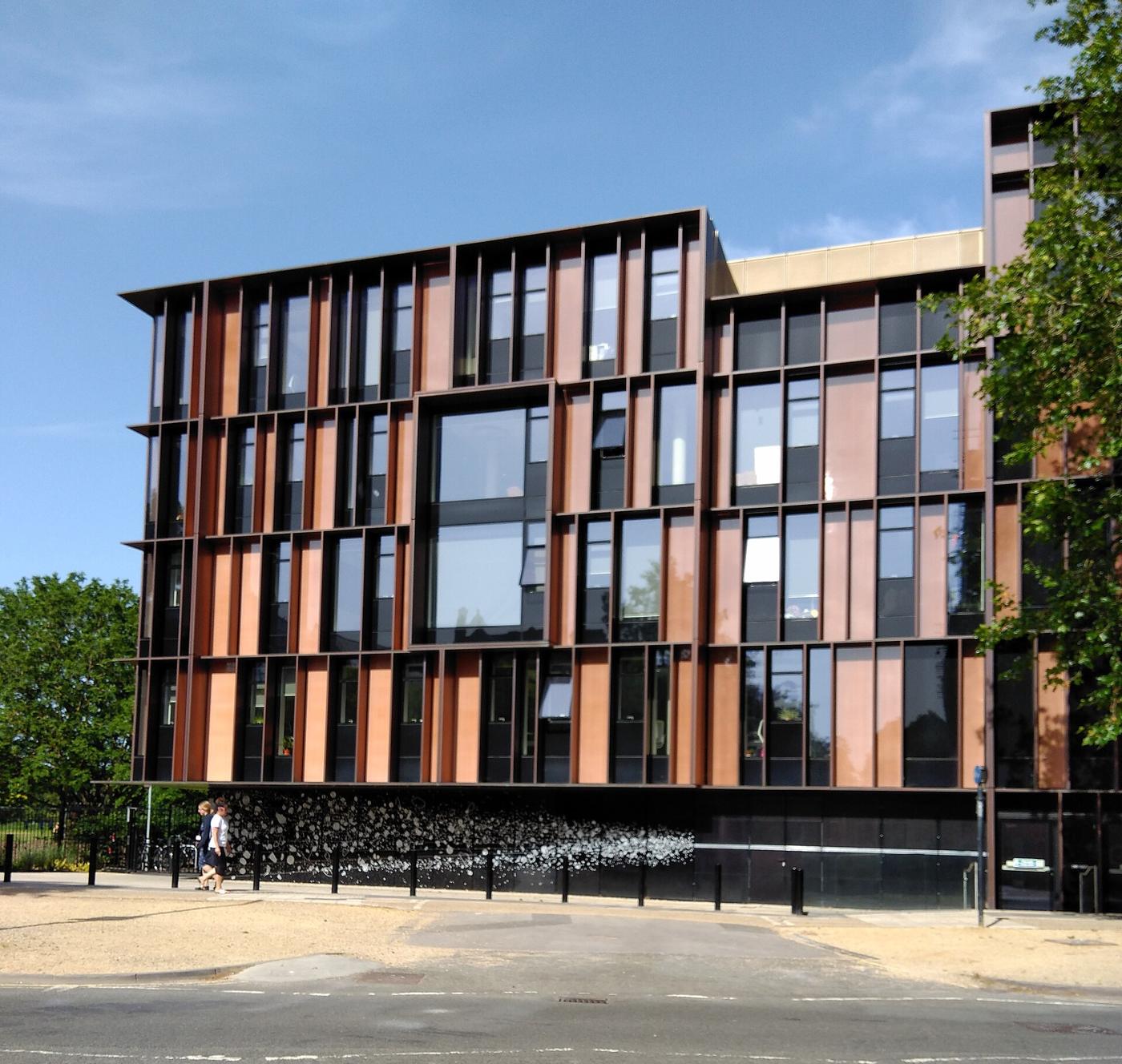
Photo: Camboxer, CC BY-SA 4.0, via Wikimedia Commons
Oxford produces spin-out companies at a steady rate, and most of them take a decade or more to prove anything. Oxford Ionics took six years to go from founding to one of the largest deals the University has seen in quantum computing.
The company was founded in 2019 by two physicists from the University of Oxford’s Department of Physics, Dr Chris Ballance and Dr Tom Harty. Both had worked on trapped-ion quantum computing at Oxford for close to a decade, and both earned their doctorates there.
The idea
A quantum computer is only as good as its qubits, and the hard part is making many of them without losing quality. Trapped ions, single charged atoms held in place by electromagnetic fields, are a promising kind of qubit, but scaling them up has been hard. Oxford Ionics set out to combine trapped-ion qubits with ordinary silicon chip technology, so that quantum computers could be built larger without giving up performance.
The deal
In June 2025 the American quantum computing company IonQ announced an agreement to buy Oxford Ionics for $1.075 billion. The deal was completed in September 2025. The University of Oxford’s Department of Physics described it as the highest-value acquisition of any University of Oxford quantum computing spin-out.
"We’ve grown from an idea to a company now joining forces with one of the world’s most ambitious players in quantum computing," Chris Ballance said. IonQ said the acquisition gives it a UK base for future work with universities, research institutions and public-sector partners, and it tied the deal to its goal of building quantum computers with two million qubits by 2030.
What it says about Oxford
The path is typical of the Oxford model even if the size is not: research done over years in a university department, a company formed around it, support from the university’s spin-out system and investors such as Oxford Science Enterprises through successive funding rounds, and then a buyer who needs the team and the patents. For the wider picture, from university spin-outs to the science parks, see our guide to Oxford’s innovation and spin-out cluster.
Frequently asked questions
What is Oxford Ionics?
A quantum computing company spun out of the University of Oxford’s Department of Physics in 2019. It combines trapped-ion qubits with silicon chip technology.
Who founded it?
Dr Chris Ballance and Dr Tom Harty, physicists who worked on trapped-ion quantum computing at Oxford.
Who bought Oxford Ionics, and for how much?
IonQ, in a deal announced in June 2025 at $1.075 billion and completed in September 2025.
Read the Department of Physics announcement
Sources
- physics.ox.ac.uk, University of Oxford's highest-value quantum computing spinout acquisition
- investors.ionq.com, IonQ completes acquisition of Oxford Ionics
- ionq.com, IonQ announces agreement to acquire Oxford Ionics
- ox.ac.uk, Dr Chris Ballance
This article was written by the Oxford Society editorial desk from the public sources listed above. We are not affiliated with the people, companies or institutions it describes.
← Back to Ledger