Literary Oxford - bookshops, libraries and reading rooms worth your time
Independent bookshops, historic libraries and reading spots of Oxford: a literary walking companion for members.
Oxford, a city steeped in intellectual history, offers an unparalleled journey through literary landscapes, from ancient libraries holding centuries of wisdom to charming bookshops and the very colleges that shaped some of the world's greatest writers. Its cobblestone streets and hallowed halls whisper tales of imagination, discovery, and profound thought, inviting visitors to walk in the footsteps of literary giants.
The Bodleian Library - A Treasury of Knowledge
At the very core of Oxford's literary identity stands the Bodleian Library, not merely a building but a vast, interconnected system of libraries holding over 13 million printed items. Founded in 1602 by Sir Thomas Bodley, it is one of the oldest libraries in Europe and a copyright library, meaning it receives a copy of every book published in the UK. This institution is a true marvel, its collection spanning millennia and cultures, from medieval manuscripts to modern scientific journals.
Its architectural grandeur is immediately striking. The Old Bodleian Library's Quadrangle, with its Tower of the Five Orders, leads into the Divinity School, a breathtaking example of English Gothic architecture. Adjacent is the iconic Radcliffe Camera, a circular reading room built in the 18th century, now part of the Bodleian system and a prominent Oxford landmark. While access to its reading rooms is generally restricted to registered readers, public tours offer a glimpse into its historic interiors, including Duke Humfrey's Library, a medieval reading room that feels like stepping directly into a Harry Potter film set – indeed, it was an inspiration.
Literary connections here are profound. J.R.R. Tolkien, Professor of Anglo-Saxon at Oxford, spent countless hours researching here, drawing inspiration for Middle-earth from ancient texts. C.S. Lewis, too, was a frequent visitor, his imagination fueled by the library's vast resources. The Bodleian holds original manuscripts of many literary works, including Shakespeare's First Folio and significant works by Percy Bysshe Shelley and Mary Shelley. It is a place where scholarship and storytelling converge, where the past informs the present and inspires future generations.
Christ Church - Alice's Wonderland and Academic Excellence
Christ Church College is perhaps Oxford's most visually stunning and historically rich college, instantly recognizable by its magnificent Tom Tower designed by Sir Christopher Wren. Beyond its architectural splendor and academic prestige, Christ Church holds a special place in literary history as the setting and inspiration for Lewis Carroll's "Alice's Adventures in Wonderland."
Charles Lutwidge Dodgson, known by his pen name Lewis Carroll, was a mathematics don at Christ Church. It was here, in the college's tranquil gardens and along the River Cherwell, that he first spun tales for Alice Liddell, the daughter of the Dean of Christ Church, Henry Liddell. Many elements of the college found their way into Alice's adventures: The Great Hall - Its stained glass windows depict characters from "Alice in Wonderland." The hall itself, with its grand portraits and long tables, could easily be imagined as a setting for a whimsical tea party. The Deanery Garden - Where Alice Liddell played, and where Dodgson often entertained her and her sisters with stories. The Christ Church Cathedral - Part of the college, its quiet dignity provides a contrast to the fantastical world Carroll created.
Visitors can explore the college's quadrangles, see the famous dining hall, and imagine the young Alice Liddell wandering through these very grounds. The college's art gallery also houses an impressive collection, but it is the palpable connection to Carroll and his enduring story that truly captivates literary enthusiasts.
Ashmolean Museum - A Muse for Minds
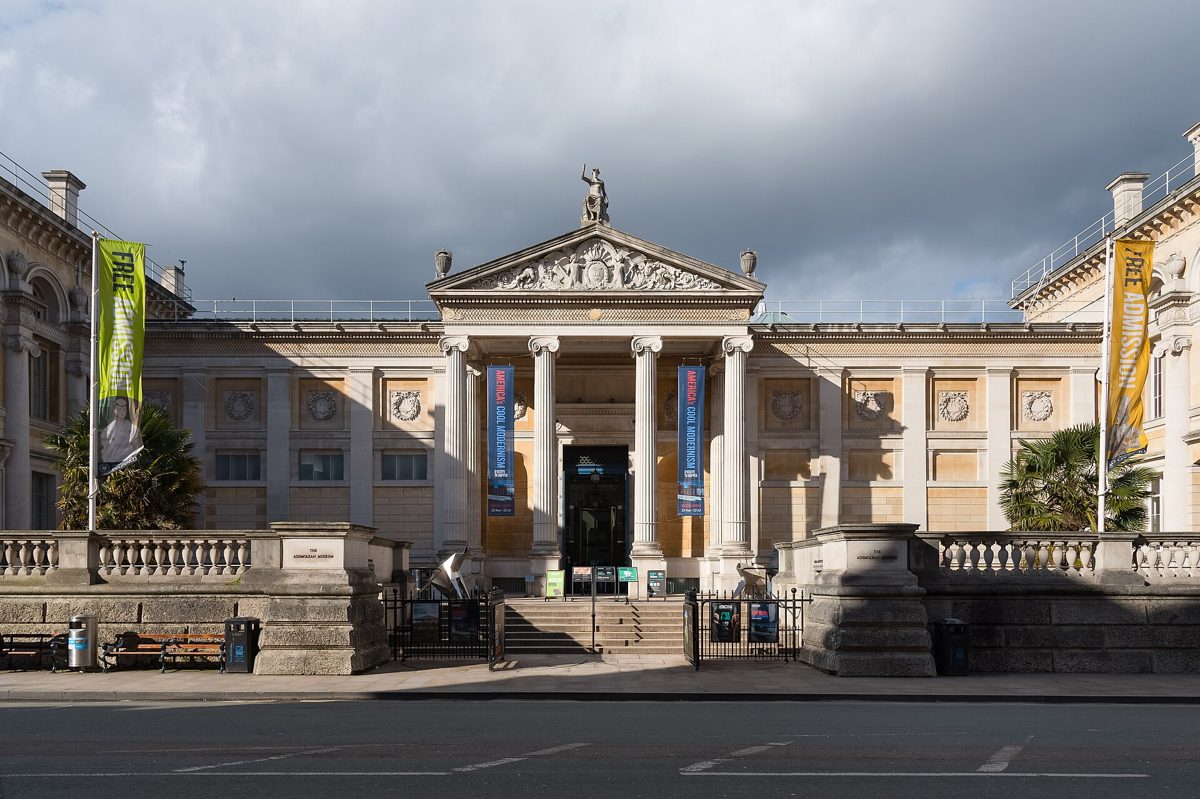
While primarily known as a museum of art and archaeology, the Ashmolean Museum, founded in 1683, holds significant, if less direct, literary relevance. As the world's first university museum, it embodies the spirit of inquiry and knowledge preservation that defines Oxford. Its diverse collections have informed countless scholars, historians, and, by extension, writers.
The museum's holdings span ancient civilizations, classical antiquity, and world art, offering a vast reservoir of historical context and cultural insight. For authors researching historical novels, mythological narratives, or simply seeking inspiration from human ingenuity across the ages, the Ashmolean is an invaluable resource. Its collection of Egyptian mummies and artifacts, for instance, has fascinated generations and undoubtedly sparked numerous fictional narratives. The museum's early benefactors and curators, like Elias Ashmole, were polymaths whose intellectual curiosity encompassed everything from natural history to antiquarian studies, laying a foundation for cross-disciplinary research that continues to feed literary thought.
The Ashmolean represents the broad intellectual ecosystem of Oxford, where art, history, and archaeology provide the rich backdrop against which literary minds flourish. It is a place where one can connect with human stories and creativity through tangible objects, offering a different, yet equally profound, form of literary engagement.
Oxford's Venerable Bookshops
No literary tour of Oxford would be complete without visiting its iconic bookshops, which serve as vibrant hubs for readers and writers alike.
### Blackwell's Broad Street
Blackwell's, established in 1879 on Broad Street, is not just a bookshop; it is an institution. Its flagship store is a labyrinthine wonderland spread across several buildings, including the famous Norrington Room. This subterranean space, opened in 1966, holds over three miles of shelving and is recognized by Guinness World Records as the largest single room selling books. Blackwell's is renowned for its academic and specialist sections, reflecting Oxford's scholarly pursuits, but it also boasts extensive fiction, poetry, and children's literature departments. Many Oxford authors have launched their books or spent countless hours browsing its shelves, making it a living part of the city's literary fabric.
### The Oxford University Press Bookshop
Located on High Street, the Oxford University Press (OUP) Bookshop showcases the publications of the world's largest university press. It is a treasure trove of academic texts, dictionaries, and scholarly works, but also features a substantial selection of general interest books, many by Oxford-affiliated authors. Visiting this shop offers a direct connection to the publishing arm that has disseminated knowledge and literature globally for centuries.
The Inklings' Haunts - Pubs and Colleges
Oxford's literary legacy extends beyond libraries and colleges into its cozy pubs, where ideas were shared, and worlds were built. The Eagle and Child Pub: Affectionately known as "The Bird and Baby," this historic pub on St Giles' is legendary as the meeting place for The Inklings, an informal literary discussion group that included C.S. Lewis, J.R.R. Tolkien, Charles Williams, and Owen Barfield. From the 1930s to the late 1940s, they would gather here on Tuesday mornings, often in the back room known as the "Rabbit Room," to read aloud from their works in progress and discuss literature, mythology, and ideas. Tolkien notably read chapters of "The Lord of the Rings" here. Magdalen College: C.S. Lewis was a Fellow of Magdalen College for 29 years. His rooms overlooked Addison's Walk, a picturesque path along the River Cherwell, which is said to have inspired passages in "The Chronicles of Narnia." Visitors can stroll along the walk and imagine Lewis pondering philosophical and fantastical concepts. Merton College: J.R.R. Tolkien was a Fellow of Merton College from 1945 until his retirement in 1959. T.S. Eliot also studied here briefly. Merton is one of Oxford's oldest colleges, offering a sense of history and quiet scholarly pursuit that would have appealed to Tolkien.
These locations offer a tangible link to the personal lives and creative processes of these celebrated authors, allowing visitors to experience the very atmosphere that fostered some of the twentieth century's most beloved fantasy literature.
Frequently asked questions
Is Oxford a good city for a literary-themed trip?
Absolutely. Oxford is exceptionally rich in literary history, offering an array of historic libraries, colleges, bookshops, and pubs directly connected to famous authors like Lewis Carroll, J.R.R. Tolkien, and C.S. Lewis. Its compact city center makes many literary landmarks easily accessible on foot.
Can I visit all the literary sites in Oxford independently?
Many sites, such as the Bodleian Library (via tours), Christ Church, and various colleges, are open to the public, usually with an admission fee. Bookshops like Blackwell's are freely accessible. Some locations, like the interiors of certain colleges, may have restricted access or require booking. Independent exploration is very feasible, but guided literary walks are also available for deeper insights.
What is the best way to experience the literary atmosphere of Oxford?
Beyond visiting specific sites, take time to simply wander. Stroll through the college quadrangles, explore the narrow lanes, and perhaps enjoy a pint in a historic pub like The Eagle and Child. Reading a book by an Oxford author while sitting by the Cherwell or in a college garden can also deeply enhance the experience, allowing you to truly immerse yourself in the city's unique literary spirit.
This is an independent member's guide compiled by Oxford BGTC Society. We are not affiliated with the venues and institutions mentioned; opening arrangements and programmes change - always confirm details on the official websites before making plans.
← Back to Events