The best museums and galleries of Oxford - a member's guide
A curated member's guide to Oxford's essential museums and galleries: what to see, when to go and what locals skip.
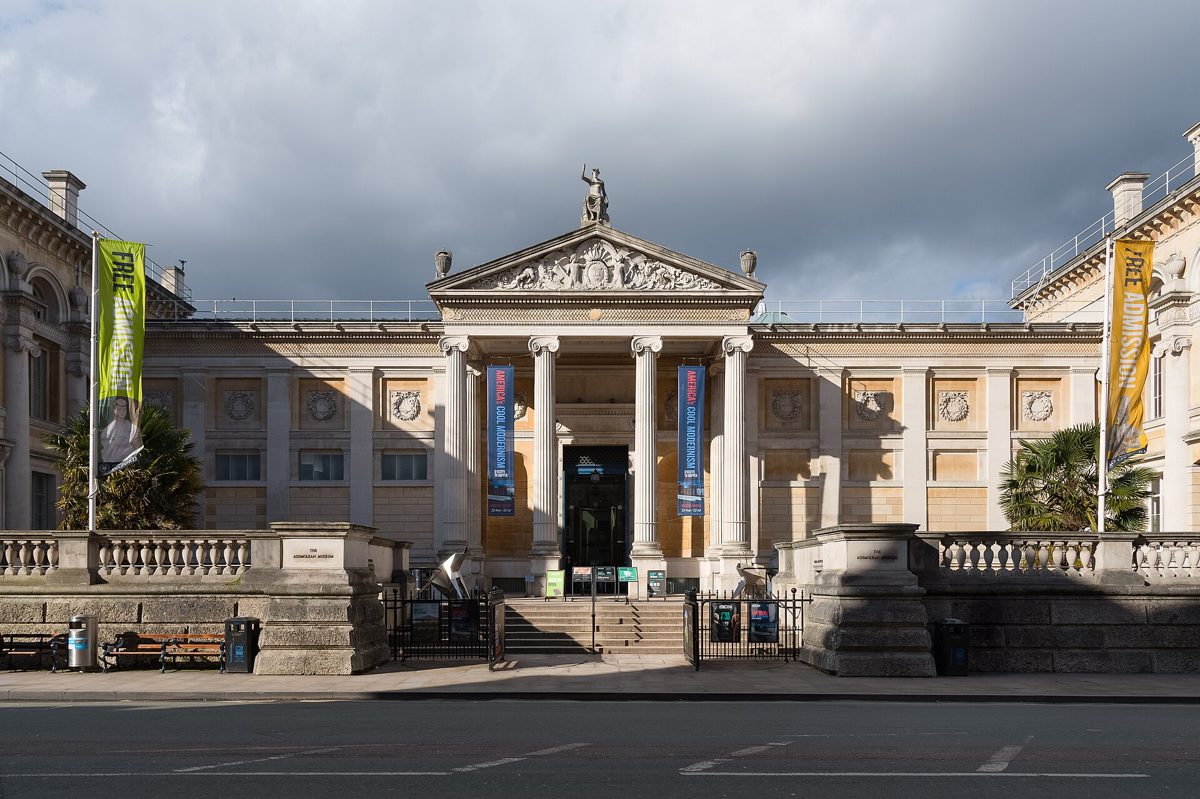
Oxford wears its history on its sleeve, but its museum scene is far from a dusty relic collection. The city packs an extraordinary density of world-class institutions into a walkable radius, most of them free. This guide covers the permanent collections worth your time, not the temporary shows that come and go. I have left out several smaller or niche spaces not because they lack charm, but because the ones below genuinely belong on any shortlist of reasons to visit or live in this city. What you will notice across all these institutions is a very Oxford trait: depth over spectacle. Collections were often built for teaching, not tourism, so you find singular objects displayed with curatorial seriousness rather than interactive dazzle. Go midweek, arrive at opening time, and you will often have entire rooms to yourself.
Ashmolean Museum
The Ashmolean is the gravitational centre of Oxford's cultural life and, by a margin, the most comprehensive museum in the city. It was founded in 1683 as Britain's first public museum, though the current neoclassical building on Beaumont Street dates from 1845, with a substantial modern extension by Rick Mather opened in 2009.
The strongest reason to visit is the breadth. You can walk from Egyptian predynastic material, through the Minoan collections (the Ashmolean holds the largest assemblage of Minoan antiquities outside Crete, including significant finds from Arthur Evans's excavations at Knossos), into a string of European fine art galleries that hold works by Michelangelo, Raphael, Turner, and the Pre-Raphaelites. The Uccello "Hunt in the Forest" is one of the most arresting late-medieval paintings in any British collection, and the room it hangs in is usually quiet enough to spend real time with it.
The cast gallery on the ground floor is a useful curiosity: plaster casts of classical and Renaissance sculpture assembled for teaching purposes in the 19th century, including the Laocoön group and the entire Trajan's Column in sections. Upstairs, the Islamic and Asian collections are genuinely world-class. The Chinese ceramics are drawn from several major bequests, and the small but potent gallery of Indian sculpture includes pieces you would normally have to visit Delhi or Chennai to see.
Practical notes: free entry, no booking required for the permanent collections. The rooftop restaurant has a good view but is not essential. Quietest times are Tuesday and Wednesday mornings, especially during university term when students are in lectures. Avoid Saturday afternoons, when the Beaumont Street entrance funnels in a steady stream of visitors.
Bodleian Library and the Divinity School
Strictly speaking, the Bodleian is a working library, not a museum. But the visitor experience operates like one, and the spaces you can access are among the most atmospheric interiors in England. The Bodleian is a legal deposit library, meaning it has a right to a copy of every book published in the UK, a status that has shaped its architecture and its obsessive expansion into underground storage across the city centre.
The Duke Humfrey's Library is the centrepiece of any guided tour. This is the oldest reading room in the Bodleian, dating to the 15th century, and it is the one most visitors recognise from countless films (the Hogwarts library scenes were shot here, though the Bodleian is understandably weary of being reduced to that association). The painted ceiling panels, the medieval manuscript bindings, the smell of old paper and waxed wood: it is a complete sensory environment, and the guides are usually working academics or doctoral students who know the collections in detail.
The Divinity School, attached to the library and accessible without a full guided tour, is a masterpiece of perpendicular Gothic architecture with a fan-vaulted ceiling completed around 1488. It was built for theology lectures, and you can still feel the pedagogical intent in the tiered stone benches and the extraordinary acoustics. Pay the small entry fee and just stand in the centre of the room for ten minutes.
What to know: the Divinity School can be visited independently for a fee. The library itself is only accessible via guided tours, which sell out. Book online in advance, especially during summer and the Christmas holidays. The extended tour that includes the Radcliffe Camera is worth the extra time. The Camera is the domed circular reading room that functions as the visual logo of Oxford, and the interior, with its radial bookshelves and gallery, is a fine piece of 18th-century neoclassical design by James Gibbs.
Christ Church Picture Gallery
Christ Church is best known for its dining hall (the one with the long tables and the portraits, yes) and its cathedral, but the college also holds a significant art collection in a purpose-built gallery designed by Powell and Moya in 1968. It is one of the most important college picture galleries in Britain, and it is far less visited than the dining hall queue.
The core of the collection is Italian Renaissance and Baroque drawing and painting, assembled largely through a series of bequests, most notably from General John Guise in 1765. The drawings collection is the highlight: Leonardo, Michelangelo, Raphael, Dürer, and Veronese are all represented, and because the works are on paper and light-sensitive, the gallery rotates its displays regularly. You cannot count on seeing a specific sheet, but the curatorial standard is high, and the rotating shows are built around real scholarship rather than crowd-pleasing themes.
The paintings include a Filippino Lippi, a fine Tintoretto, and a Van Dyck, but the real strength is the Italian early Renaissance material, which feels coherent and deliberately collected rather than assembled by accident. The gallery is small; you can see the whole thing in 30 to 45 minutes, which makes it an ideal stop between other commitments.
Practical notes: a separate admission fee applies, and it is not included in the general Christ Church visitor ticket. The gallery is quietest first thing after opening and in the last hour before closing. Closed on Mondays for much of the year, so check ahead. The location is just inside the main Christ Church entrance off St Aldate's, and you can visit the gallery without taking the full college and hall tour.
Museum of Natural History and the Pitt Rivers
These two institutions share a building on Parks Road and function as a single visit for most people, but they are distinct museums with different intellectual personalities.
The Oxford University Museum of Natural History is housed in a Victorian glass-and-iron hall that is itself a significant piece of 19th-century architecture, designed by Benjamin Woodward and opened in 1860. The cast-iron columns are decorated with wrought-iron foliage, and the glass roof floods the central court with natural light. The collections are what you would expect: dinosaur skeletons, mineral displays, a famous dodo specimen (the Oxford dodo is the most complete surviving remains of the species, and it inspired the dodo in Alice's Adventures in Wonderland), and a strong evolutionary biology strand. The museum is popular with families, so if you want quiet contemplation, this is not the place on a Saturday morning. But on a weekday term-time afternoon, especially in the upper galleries, it is calm and absorbing.
The Pittman Museum, accessed through the back of the Natural History hall, is something else entirely. It is an anthropological museum of the old school: dense, dimly lit, packed with objects arranged typologically rather than chronologically or geographically. The collection of Pacific art and material culture is one of the finest in the world, assembled largely from Captain Cook's voyages and subsequent 19th-century expeditions. The display cases are notorious for their Victorian density, and the lighting is intentionally low for conservation reasons. This is not a museum that spoon-feeds you; you need to look slowly and read the labels. The shrunken heads and the Maori meeting house are the most famous individual items, but the strength of the collection is in the textiles and the body ornaments from Oceania. It rewards repeat visits.
Practical notes: both museums are free. The Natural History opens earlier and attracts families from 10am. The Pittman is consistently quieter and is a good bet for a lunchtime visit. The building is shared, but the entrances are separate, and you can visit one without the other.
Modern Art Oxford
Modern Art Oxford is the city's leading contemporary art space, housed in a converted brewery on St Ebbe's Street, about a three-minute walk from the Westgate shopping centre. It was founded in 1965 and has built a reputation for showing serious contemporary artists early in their careers, often before they become household names. Past exhibitions have included solo shows by Yayoi Kusama, Tracey Emin, and Marina Abramović.
The gallery has no permanent collection, so it is a space for temporary exhibitions only. The programme is international and conceptually driven, with a bias toward installation, video, and socially engaged practice rather than painting. The gallery spaces are modest in scale, spread over two floors, and the architecture is unobtrusive, which keeps the focus on the art. The shop is small but well-curated for art books and monographs.
Practical notes: free entry. The gallery is closed on Mondays and between exhibition installations, so always check the website before visiting. It is a relatively quick visit, 30 to 60 minutes depending on the show. The café on the ground floor is a useful place to work or meet people and is less crowded than the chain options nearby.
The Oxford University Press Museum
This is a small, specific museum that gets overlooked because it sits inside the Oxford University Press headquarters on Great Clarendon Street, a 15-minute walk north of the city centre. It is not a destination for a casual visitor, but if you are interested in the history of printing, publishing, or the English language, it is a quiet gem.
The museum tells the story of OUP from its origins in the 17th century, with a particular focus on the Oxford English Dictionary and its creation under James Murray. You can see original slips from the dictionary's early compilation, early printing presses, and a selection of the Press's most significant publications. The museum is small, essentially a single room, but the material is well-presented and the staff are knowledgeable.
Practical notes: free entry, but opening hours are limited, typically weekday afternoons only. Check the OUP website before going. The museum is a short walk from the Natural History Museum, so it can be combined with that visit. It is never crowded.
Frequently asked questions
Are the Oxford museums genuinely free, or is there a catch?
The Ashmolean, the Natural History Museum, the Pittman Museum, and Modern Art Oxford are all free to enter and have no mandatory donation desks or suggested fees. The Bodleian Library guided tours carry a charge because you are paying for a guide and for access to restricted working spaces. Christ Church College Museum charges a separate admission fee distinct from the college visitor route. None of these fees are hidden or aggressive; they are clearly signposted, and the information is available online before you arrive.
What is the best strategy for a one-day museum visit in Oxford?
Start at the Ashmolean when it opens at 10am (the rooftop restaurant is not open for breakfast, but there are good coffee options on Walton Street a minute's walk away). Spend two hours with the collections. Walk across the road to the Natural History Museum and spend an hour there, then go through into the Pittman for another hour. Lunch at one of the Walton Street cafes. In the afternoon, book a Bodleian tour online in advance for a 2pm or 3pm slot, which will take about an hour. That gives you four world-class institutions in a single day without rushing. If you have energy left, Modern Art Oxford is open until 5pm and is a 15-minute walk from the Bodleian.
Can I visit the university colleges' own collections beyond Christ Church?
Many colleges hold significant art and library collections, but access is variable. Magdalen, New College, and Wadham all have fine chapels and halls with notable works, but they are not set up as public museums in the way Christ Church Picture Gallery is. Some colleges open their libraries during the Oxford Open Doors weekend in September. For a reliable year-round college collection, the Christ Church Picture Gallery is the best option, followed by the Worcester College library and gardens, which are open to visitors on set afternoons. Always check individual college websites before visiting, because access is governed by college terms, private events, and exams.
This is an independent member's guide compiled by Oxford BGTC Society. We are not affiliated with the venues and institutions mentioned; opening arrangements and programmes change - always confirm details on the official websites before making plans.
← Back to Events