Oxford science heritage - a walking guide
From Halley's observatory to penicillin: the science that happened inside the old city.
This guide traces a compact walk through Oxford's scientific past, from instruments and natural history to astronomy, plants and penicillin. Each stop is a real place with surviving buildings, collections or memorials, and the notes below focus on what happened there, what remains, and what a careful visitor should look at.
History of Science Museum on Broad Street
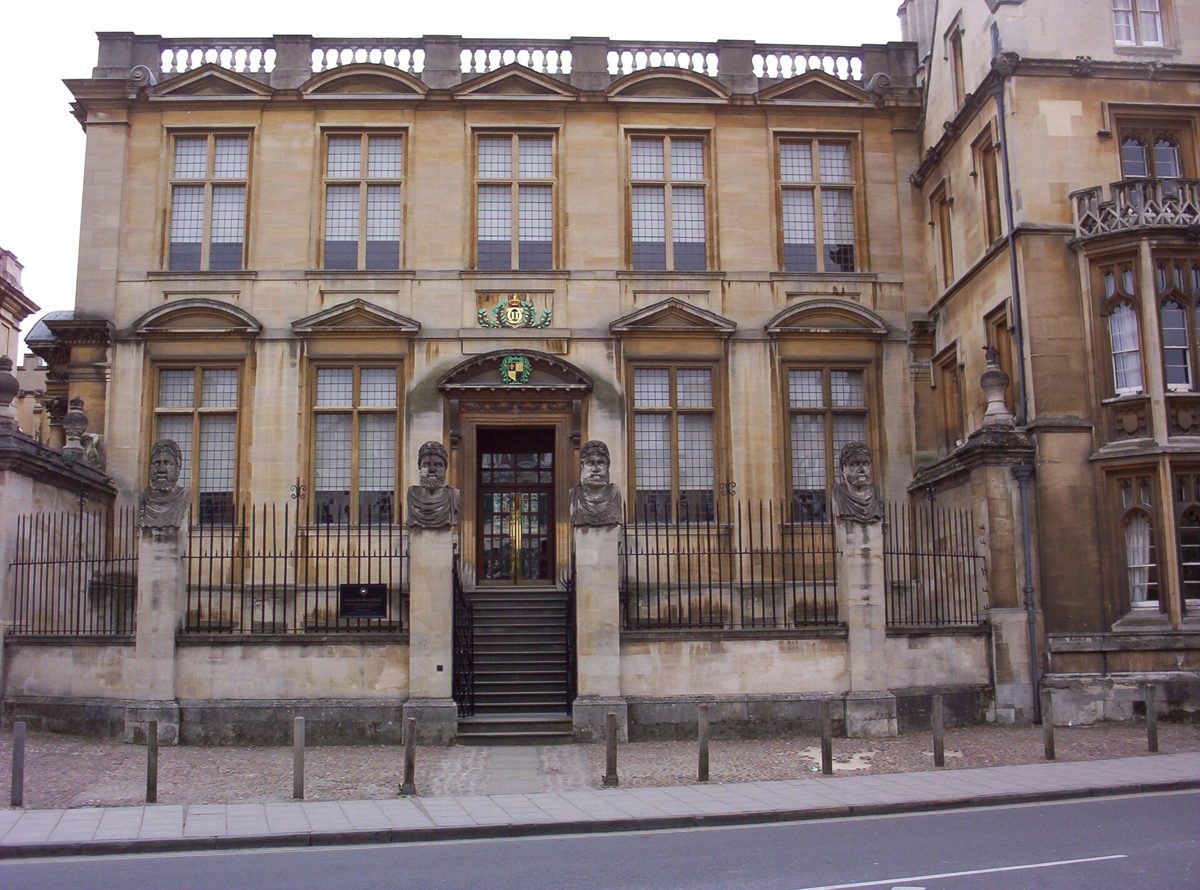
The History of Science Museum stands on Broad Street, in a building that began as the Old Ashmolean Museum. Its collections cover astronomy, geometry, timekeeping, medicine and chemistry, with instruments that range from Islamic astrolabes to early microscopes. Einstein's blackboard from his 1931 Oxford lecture is one of the best-known objects, but the quieter cases are equally rewarding: seventeenth-century telescopes, navigational instruments and mathematical tools show how measurement became a discipline. Look for the carved stone entrance, the basement galleries, and the way instruments are grouped by use rather than by date.
Oxford University Museum of Natural History
The Oxford University Museum of Natural History is a Victorian Gothic building on Parks Road, designed around a central court and a glass roof. It was created to bring scientific collections together and to support teaching in natural philosophy. Inside, the iron-and-glass roof is itself a lesson in nineteenth-century engineering, while the displays include dinosaur skeletons, mineral specimens, zoological material and teaching collections. The building's stone carvings and animal details reward slow looking. The adjoining Pitt Rivers Museum is a separate institution, so do not confuse the two when planning a visit.
Radcliffe Observatory
The Radcliffe Observatory is one of Oxford's most distinctive scientific buildings, with its octagonal tower and classical detail. It was built for astronomical observation and served the Radcliffe Observatory's work in the eighteenth and nineteenth centuries. The tower's design reflects both scientific ambition and contemporary architecture, and the building survives as part of Green Templeton College. Visitors should look at the exterior form, the observatory's relationship to the surrounding college buildings, and any surviving astronomical fixtures or commemorative markers. The instruments associated with the observatory's work are now largely elsewhere, so the building itself is the main survival.
Oxford Botanic Garden
The Oxford Botanic Garden is Britain's oldest botanic garden, founded in 1621, and it sits beside the River Cherwell near Magdalen Bridge. Its original purpose was medicinal and practical: plants were grown for study, physic and teaching. The Danby Gate marks the entrance, while glasshouses, borders and systematic beds show how plant science has changed over four centuries. Look for the medicinal plant collections, the historic wall and gate, and the way the garden's layout separates teaching, display and conservation. The garden's riverside setting also explains why its early history involved drainage, flooding and careful siting.
Sir William Dunn School of Pathology and Penicillin
The Sir William Dunn School of Pathology is the site most closely associated with turning penicillin from a laboratory observation into a usable medicine. Howard Florey, Ernst Chain and Norman Heatley worked there during the Second World War, developing methods for extracting, purifying and testing penicillin. Their work built on Alexander Fleming's earlier discovery and required new chemical, biological and manufacturing techniques. What survives is the institutional setting rather than a single dramatic object: the school remains a working science department, and its connection to penicillin is marked through commemoration and historical interpretation. Look for plaques, named spaces and any displayed equipment or documents that record the wartime effort.
A Suggested Walking Order
Start on Broad Street at the History of Science Museum. Walk north to Parks Road for the Oxford University Museum of Natural History. Continue to the Radcliffe Observatory and Green Templeton College. Return toward the city centre and cross to the Botanic Garden by Magdalen Bridge. Finish at the Sir William Dunn School of Pathology, noting that it is a working department rather than a museum.
What to Look For
Instruments as evidence: compare astrolabes, telescopes and microscopes by function. Architecture as science: the glass roof at the natural history museum and the observatory tower. Living collections: plants with medicinal histories in the Botanic Garden. Process, not just discovery: penicillin required extraction, purification, testing and production.
This is an independent member's guide compiled by Oxford Society. We are not affiliated with the venues and institutions mentioned; opening arrangements and programmes change - always confirm details on the official websites before making plans.
← Back to Guides