Free things to do in Oxford - a member's guide
A city's character is often in what it gives away: the best of Oxford at no cost.
Oxford offers a wealth of free experiences, allowing visitors to immerse themselves in history, art, and nature without spending a penny. From world-class museums housing ancient artifacts and natural wonders to expansive meadows with historic views, the city provides rich cultural engagement and serene escapes for everyone.
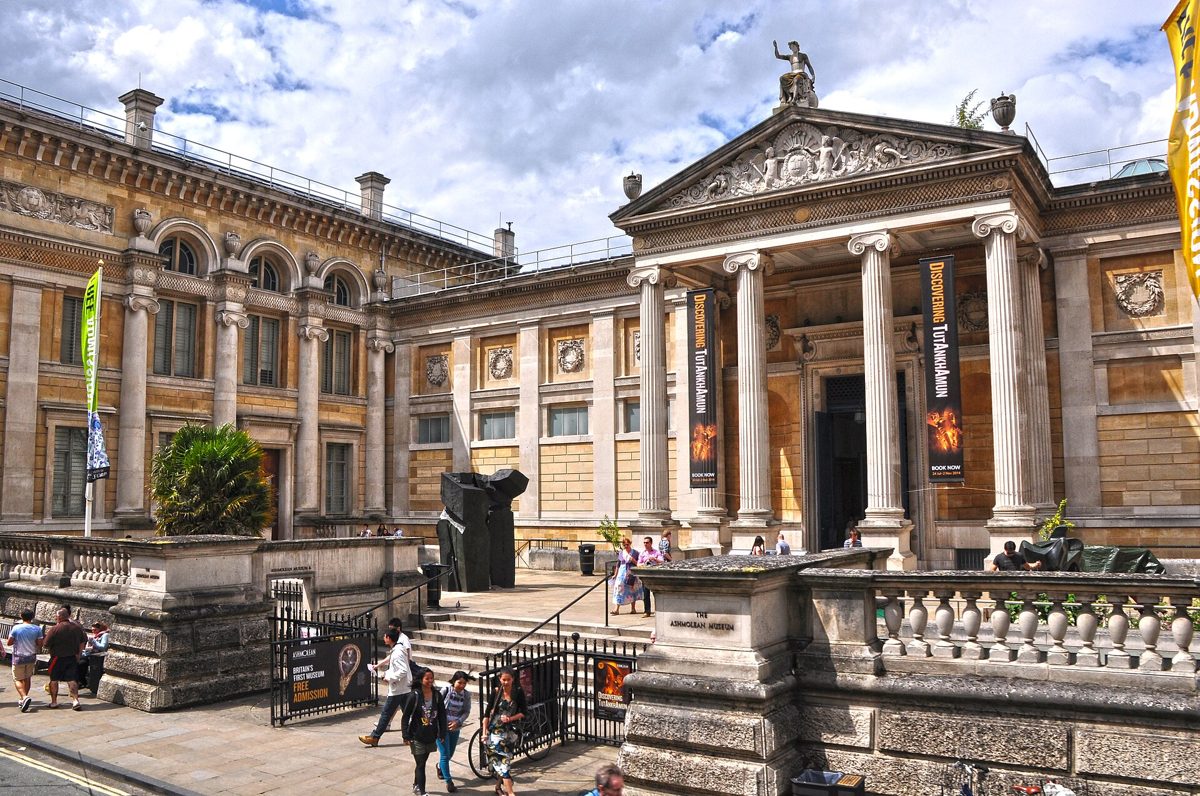
The Ashmolean Museum - A World of Art and Archaeology
The Ashmolean, the UK's first public museum, established in 1683, presents an extraordinary journey through human civilization. Its collections span millennia and continents, offering a comprehensive look at art and archaeology. Visitors encounter significant artifacts from Ancient Egypt and Nubia, including detailed sarcophagi and mummified remains that tell stories of ancient beliefs and daily life. The Greek and Roman galleries showcase classical sculpture, ceramics, and coinage, providing insight into foundational Western cultures.
Moving through the museum, one can admire Renaissance masterpieces such as drawings by Raphael and Michelangelo, alongside later European art, including works by Impressionists like Camille Pissarro and Édouard Manet. The Anglo-Saxon treasures are particularly compelling, notably the Alfred Jewel, a magnificent piece of 9th-century craftsmanship believed to have belonged to King Alfred the Great. Beyond Europe, the Ashmolean houses exquisite Islamic art, intricate Chinese ceramics, and vibrant Japanese prints, demonstrating global artistic traditions. Each gallery is a carefully curated window into a specific period or culture, allowing for deep exploration or a broad overview.
The museum's enduring value lies in its sheer breadth and the quality of its holdings. It provides a unique opportunity to witness the interconnectedness of human history and artistic expression on a global scale. From prehistoric tools to contemporary art, the Ashmolean illuminates how different societies have interpreted their world. Its free admission makes this vast educational resource accessible to all, fostering a deeper understanding and appreciation for cultural heritage. It's a place where a Roman bust sits near a Japanese woodblock print, inviting contemplation on universal themes of beauty, power, and belief.
Pitt Rivers Museum - A Cabinet of Curiosities
Nestled behind the Oxford University Museum of Natural History, the Pitt Rivers Museum is an experience unlike any other. Founded in 1884 by General Augustus Pitt Rivers, it houses an astonishing collection of ethnographic and archaeological objects, displayed in a dense, Victorian "cabinet of curiosities" style. Rather than organizing items geographically, the museum arranges them typologically-by their use or form-creating unexpected connections across cultures and time periods.
As you step inside, you are immediately struck by the towering totem poles reaching towards the glass roof and the myriad of glass cases packed with thousands of artifacts. Here, you might find a collection of shrunken heads, or tsantsas, from the Shuar people of Ecuador, displayed near ancient Egyptian combs or tools from Oceania. Other exhibits feature a vast array of masks from various cultures, musical instruments like didgeridoos and ceremonial drums, intricate weapons, and ritual objects used in ceremonies worldwide. The handwritten labels and original display methods contribute to its unique, time-capsule atmosphere.
The Pitt Rivers is worth visiting for its immersive, almost overwhelming sensory experience. It challenges conventional museum displays, encouraging visitors to draw their own conclusions about human ingenuity, adaptation, and cultural diversity. The sheer volume of objects and their thought-provoking arrangement offer endless opportunities for discovery. It's a place where one can spend hours examining intricate details, pondering the stories behind each object, and reflecting on the shared human experience through material culture. It's a profound reminder of the diversity and complexity of human societies across the globe.
Oxford University Museum of Natural History - Victorian Grandeur and Earth's Story
The Oxford University Museum of Natural History is an architectural masterpiece in itself, a stunning example of Victorian neo-Gothic design. Opened in 1860, its grand hall features a breathtaking glass and cast-iron roof supported by pillars adorned with carvings of plants and animals. This magnificent structure houses the University's extensive collections of natural science specimens, making the building an integral part of the exhibition.
Within this impressive space, visitors encounter a comprehensive array of geological and zoological exhibits. Dominating the central court are impressive dinosaur skeletons, including a towering Tyrannosaurus rex and an Iguanodon. The museum also holds the most complete remains of a dodo outside of Mauritius, offering a poignant reminder of extinction. Further collections include a vast entomological display with thousands of insects, detailed taxidermied animals from around the world, and extensive geological specimens showcasing Earth's mineral and rock formations.
This museum is an invaluable resource for anyone interested in the natural world, from children fascinated by dinosaurs to adults intrigued by evolutionary biology. Its historical significance is also notable, as it was the site of the famous 1860 debate between Thomas Henry Huxley and Bishop Samuel Wilberforce on Darwin's theory of evolution. The combination of spectacular architecture, significant scientific collections, and historical context makes it a compelling and educational visit. It provides a tangible connection to the history of science and the wonders of the natural world, all within a truly inspiring setting.
Weston Library Exhibition Galleries - Pages of History
Part of the renowned Bodleian Libraries, the Weston Library, a modern architectural triumph integrated within Oxford's historic core, serves as the primary public exhibition space for the Bodleian's vast collections. While the main reading rooms are reserved for researchers, the exhibition galleries are freely accessible to all, offering a rare glimpse into some of the world's most significant cultural and historical artifacts.
These galleries host rotating exhibitions that draw from the Bodleian's extensive holdings of over 13 million printed items, manuscripts, maps, and archival materials. A visitor might encounter original Shakespeare folios, seeing the Bard's words in their earliest printed form. Other exhibitions often feature beautifully illuminated medieval manuscripts, ancient maps that charted unknown worlds, early scientific treatises that changed human understanding, or literary first editions from authors like J.R.R. Tolkien or C.S. Lewis. The themes vary widely, from the history of science and exploration to literary anniversaries and social movements, always presented with scholarly rigor and engaging narrative.
The Weston Library exhibitions are a unique opportunity to connect directly with primary sources of human knowledge and creativity. They allow the public to view fragile, often priceless, documents that have shaped history, literature, and science. The careful curation and thematic presentation provide context and insight, making these historical objects relevant to contemporary audiences. It's an inspiring venue for anyone with an interest in books, history, and the evolution of ideas, providing an intimate encounter with the intellectual heritage preserved by the Bodleian Libraries.
Port Meadow - Ancient Pastures by the Thames
For a refreshing contrast to Oxford's scholarly institutions, a walk across Port Meadow offers a vast expanse of natural beauty and historical tranquility. This ancient common land, stretching along the River Thames-or the Isis, as it's known locally in Oxford-has been grazed by livestock for over a thousand years, since the Domesday Book. It remains one of Oxford's largest open spaces, providing a vital green lung for the city.
As you wander across Port Meadow, you are likely to encounter wild horses and cattle grazing freely, adding to the pastoral charm. The wide-open fields provide uninterrupted views, with Oxford's iconic spires visible in the distance, offering a unique perspective of the city. The River Thames meanders along its edge, making it a popular spot for serene riverside walks, birdwatching, and simply enjoying the peace and quiet away from the urban bustle. Depending on the season, the meadow transforms, from vibrant green in spring to golden hues in autumn.
Port Meadow is worth the time for its historical significance, its natural beauty, and the unparalleled sense of calm it offers. It's a place where you can connect with nature, observe local wildlife, and reflect on centuries of continuous use. The expansive views and fresh air provide an invigorating escape, making it an ideal destination for a leisurely stroll, a picnic, or simply to clear your head. It's a reminder that even within a bustling academic city, ancient landscapes endure, offering timeless solace.
Practical Tips for Your Free Oxford Exploration
Maximizing your experience of Oxford's free attractions involves a bit of planning to ensure comfort and enjoyment. Here are some pointers: Wear comfortable shoes: Oxford's city center is compact and best explored on foot. Long walks in museums and across Port Meadow require appropriate footwear. Check museum layouts: Both the Ashmolean and Pitt Rivers Museums are extensive. Consider looking at their floor plans online beforehand to prioritize areas of interest if your time is limited. Pack light: While most museums offer cloakroom facilities, carrying a small bag makes navigating crowded galleries easier. Bring water and snacks: Especially for Port Meadow, there are limited facilities once you are out on the common. Staying hydrated is key. Combine visits: The Oxford University Museum of Natural History and the Pitt Rivers Museum are housed in connected buildings, making it easy to visit both in one trip. Consider public transport for Port Meadow: While walkable from the city center, a bus ride to the edge of the meadow can save energy for the walk itself. Allow ample time: Each of these institutions and Port Meadow offers hours of exploration. Avoid rushing to truly appreciate their offerings.
Frequently asked questions
Are all parts of these museums always free?
Generally, the permanent collections of the Ashmolean Museum, Pitt Rivers Museum, and Oxford University Museum of Natural History are free to enter. This includes the vast majority of their exhibits, which are available to the public without charge. However, special temporary exhibitions, often featuring loaned items or specific thematic displays, typically require a ticket for entry. The Weston Library's dedicated exhibition galleries are always free for their public displays. It's always a good practice to check their official websites for details on current special exhibitions.
Can I take photos inside these free attractions?
Photography for personal, non-commercial use is generally permitted in the permanent collection galleries of the Ashmolean Museum, Pitt Rivers Museum, and Oxford University Museum of Natural History. However, flash photography is usually prohibited to protect sensitive artifacts and for the comfort of other visitors. In the Weston Library exhibition galleries, photography policies can vary depending on the specific exhibition and the fragility or copyright status of the items on display, so it's best to look for signage or ask staff. Always be mindful of other visitors and respect any explicit restrictions.
Is Port Meadow accessible for everyone?
Port Meadow is largely open grassland, and while there are established paths, these are natural and can be uneven, muddy, or wet, especially after rain. Access points from the surrounding roads are generally flat, but the terrain across the meadow itself is not paved or specifically adapted for wheelchairs or those with significant mobility challenges. The riverside paths can also become narrow or muddy. Visitors with mobility concerns should exercise caution and be prepared for variable ground conditions. It offers a natural, rather than manicured, outdoor experience.
This is an independent member's guide compiled by Oxford BGTC Society. We are not affiliated with the venues and institutions mentioned; opening arrangements and programmes change - always confirm details on the official websites before making plans.
← Back to Events